In defence, performance isn’t negotiable. All parts-whether it be inside a fighter jet,submarine, or tank-need to work precisely. A single failure can lead to an overall failure.When lives, missions, or national security is at stake, "good enough" simply isn't good enough.
That is precisely why honing machines are not just useful, but also essential to defence manufacturing. They are critical for making sure that important parts not only are made to the tightest tolerances, but also provide maximum reliability in the most difficult conditions.
Honing isn’t just a finishing touch. It’s what makes the difference between a part that survives under fire and one that fails.
What honing actually does - and why it's so effective
At its core, honing is a finishing process used to improve the internal surface of cylindrical parts.
But it’s not just about smoothing a bore. It’s about bringing it to its exact final size, shape,and alignment - often within ±1 - 2 µm, and with surface finishes as smooth as 0.1 - 0.4 µm Ra.
This results in:
- Tight, repeatable tolerances
- Improved sealing
- Reduced wear and friction
- Better alignment and performance
- Longer part and system life
Why It’s a Must-Have in Defence Manufacturing
In the field of defence or military, there are no second chances. Be it a missile system, an aircraft engine, or a ground vehicle’s recoil system, every component has to work right, the first time.
In the aerospace and defence manufacturing sector, there are few processes able to match the precision and finishes created by honing.
Honing is a consistent, accurate, and repeatable process, which is part of the reason why it is often preferred in high-performance defence part processes.
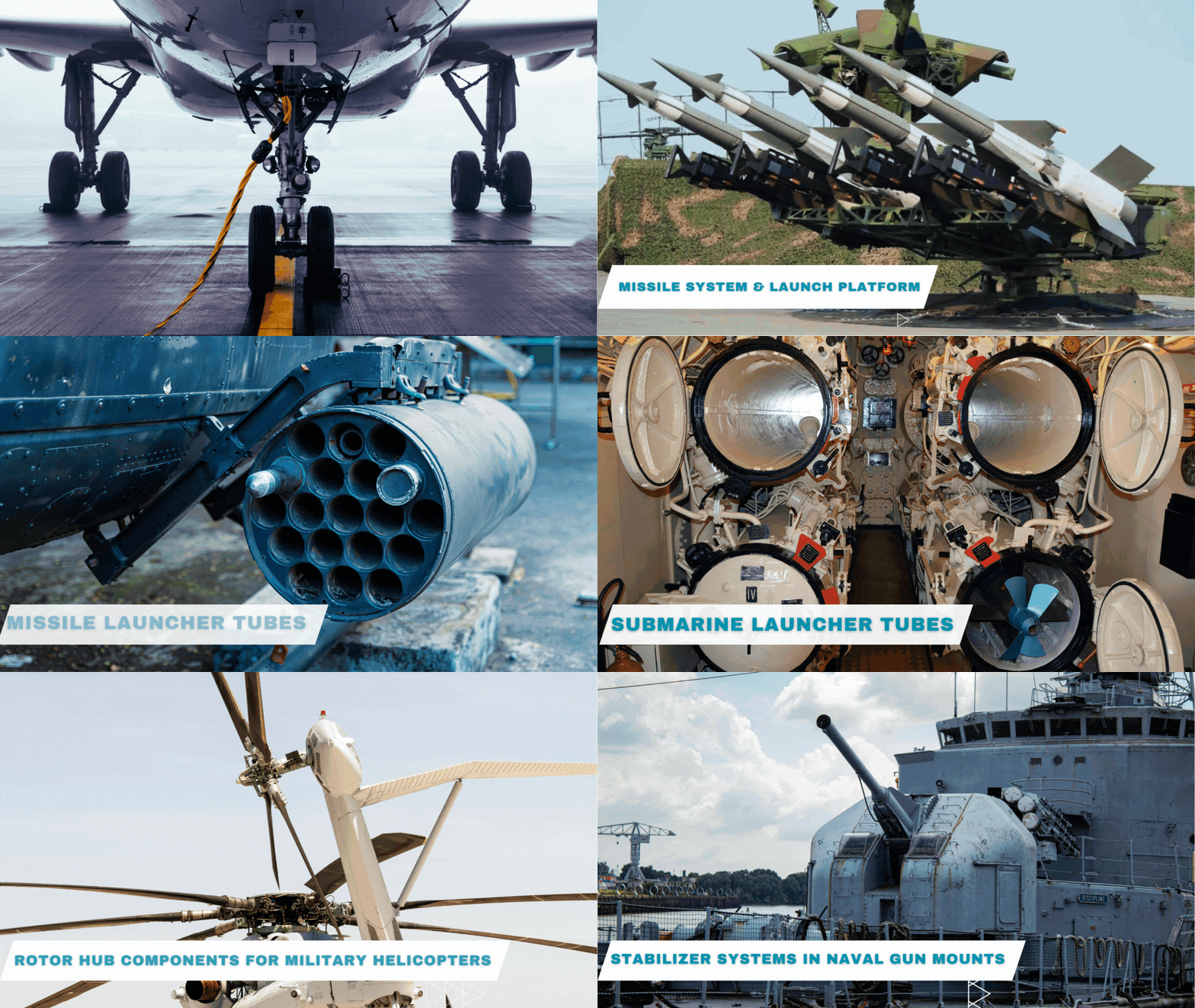
Common Defence Components That Rely on Honing
Each of these parts undergoes high stress, impact, pressure, or heat, and sometimes all at once. Honing ensures they can handle it without failure.
What makes honing essential in military applications
In military systems, there’s no room for error, especially when components are expected to perform under extreme pressure, heat, and mechanical stress. That’s where precision honing plays a critical role.
Defence-grade parts often operate in mission-critical environments, and honing ensures they’re built to handle that pressure - literally. It improves the internal geometry and surface quality of parts, which directly translates to better performance, longer service life, and lower failure risk.
Here’s what precision honing brings to defence manufacturing:
- Better sealing in hydraulic and fuel systems
- Uniform precision bore finishing for moving parts and assemblies
- Lower friction, improving fuel efficiency and heat control
- Dimensional accuracy for complex and tightly packed systems
- Enhanced firing accuracy in long-range weapon barrels
- Smooth bore alignment that reduces vibration
- Longer lifespan of high-load, high-speed components
- Lower risk of fatigue in harsh, demanding environments
- Smoother internal surfaces for efficient fluid flow
- Reliable fit and finish for aerospace-grade assemblies
- High performance under sustained pressure in actuator systems
Honing isn’t just about meeting specs, it’s about keeping systems ready when everything’s on the line.
Meeting Global Defence Standards Starts with the Right Machines
Precision is only one part of the equation. To meet the demands of defence programs, honing machines also need to be built for compliance and traceability.
That means you need to look for systems that can handle -
- Titanium, high-strength steel, and defence-grade alloys
- Custom part fixtures for non-standard shapes
- Full CNC/PLC automation and process data logging
And they must also align with the standards that matter in defence manufacturing:
- ISO 9001 - A must for any manufacturing process under quality control
- AS9100 / EN 9100 - Must require for quality management in aerospace and defence
- NADCAP - Accreditation of various special processes, such as honing, heat treatment, and NDT
- MIL-STD compliance - U.S. military design and testing requirements
- ITAR - For organisations manufacturing U.S. defence-related components
- CE Certification - For systems used in the European market
- EN 9100 (Europe) - Equivalent of AS9100 for European aerospace and defence companies
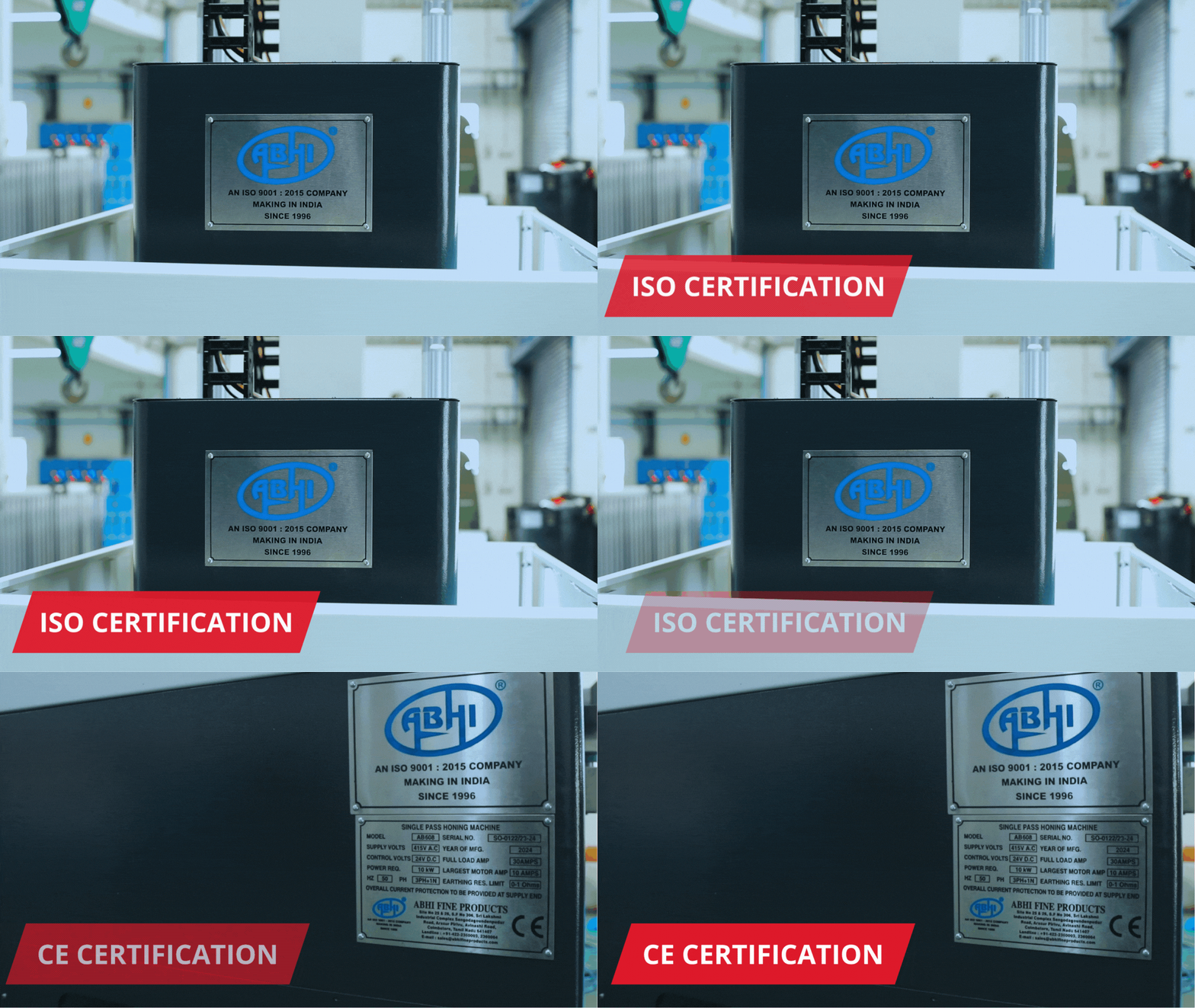
Honing systems that meet these standards don’t just deliver tight tolerances - they deliver trust, compliance, and long-term program stability.
Countries Leading the Use of Honing Machines in Defence Manufacturing

Precision is non-negotiable in modern defence manufacturing, and some countries are investing heavily in honing technology to stay ahead.
These nations are leading the way in using honing machines to support their military production capabilities:
- United States: As one of the largest defence manufacturers in the world, the U.S. integrates honing across nearly every platform - from aircraft and missile systems to armoured vehicles and naval components.
- Germany: Known for its precision engineering, Germany uses honing extensively in submarines, propulsion systems, aircraft engines, and advanced missile technology.
- India: With growing investments in indigenous defence programs, India relies on honing for tanks, fighter aircraft, and guided missile systems - all manufactured locally under “Make in India.”
- China: As a high-volume defence producer, China uses honing machines widely across artillery production, UAVs, and naval systems to maintain large-scale manufacturing efficiency and consistency.
- Israel: Focused on advanced and compact defence solutions, Israel uses honing in the production of precision-guided munitions, drone components, and integrated targeting systems.
- South Korea: Strong in both land and naval defence, South Korea uses honing in tank systems, missile launchers, and military aviation, emphasising both performance and reliability.
- France, UK, and Russia: These long-established defence powers continue to invest in honing technologies for aerospace, nuclear, and armoured platforms, ensuring precision in high-risk systems.
Across continents, honing remains a critical process for defence readiness. These countries invest heavily in honing because they know it delivers operational certainty, even under fire.
Note: This summary is based on publicly available data from defence reports, global manufacturing insights, and industry participation as of mid-2025. Actual usage may vary by program and supplier.
Beyond Defence - Where Else Honing Machines Matter
While honing plays a key role in defence, its impact stretches far beyond the battlefield. They are also used by various other industries for their needs.
- Aerospace - for engines, actuators, and landing gear
- Automotive - for cylinders, fuel systems, and powertrains
- Oil & Gas - for valves, pumps, and pressure systems
- Power Generation - for turbines, compressors, and cooling systems
All these industries rely on honing for the same reasons - tighter control, longer life, and zero room for error.
But defence remains the most demanding application, where even the smallest error can compromise the entire system.
The Strategic Role of Honing in Global Defense
As defence systems develop - with AI-guided weapons, hypersonics, and autonomous platforms - precision has never been so important. Honing provides the accuracy, durability, and repeatability that next-generation systems require.
Whether it’s keeping a missile on target or ensuring a satellite deploys without delay, honing is the hidden process that keeps today’s advanced tech functioning under battle pressure.
Takeaway Points
Precision keeps soldiers safe, and honing is the quiet process behind that safety. For manufacturers in this space, honing isn’t just another process; it’s a core part of building equipment that works when it matters most.
When failure isn’t an option, and in defence, it never is - honing gives you one less thing to worry about.
« How Auto Gauging Improves Honing Accuracy and Efficiency on the Shop Floor
Industrial Honing Machines: Precision Solutions for Global Manufacturing Applications »